United Arab Emirates · Dubai
Branding & Creative Agency in Dubai
A consistent brand system across presentations, exhibition graphics and commercial environments—not another disconnected campaign asset.
The Concept WLL develops branding and creative applications for organisations presenting themselves in Dubai. We connect brand identity, campaign art direction and physical applications, so the same business is recognisable in a sales presentation, an exhibition environment and a product showcase. The useful question is not how many designs can be produced, but which decisions your audience needs to make and how the visual system helps them make those decisions.
Dubai buyers can encounter the same organisation across several formats in a short time: a meeting invitation, a pitch deck, a launch display and an exhibition stand. Those touchpoints need a common hierarchy without looking like enlarged copies of one file. This page covers creative design and brand rollout, distinct from our Dubai brand-activation page, which addresses participation and live campaign operations. Our Bahrain headquarters and Riyadh production capability support regional project delivery; no Dubai office or local portfolio claim is made.
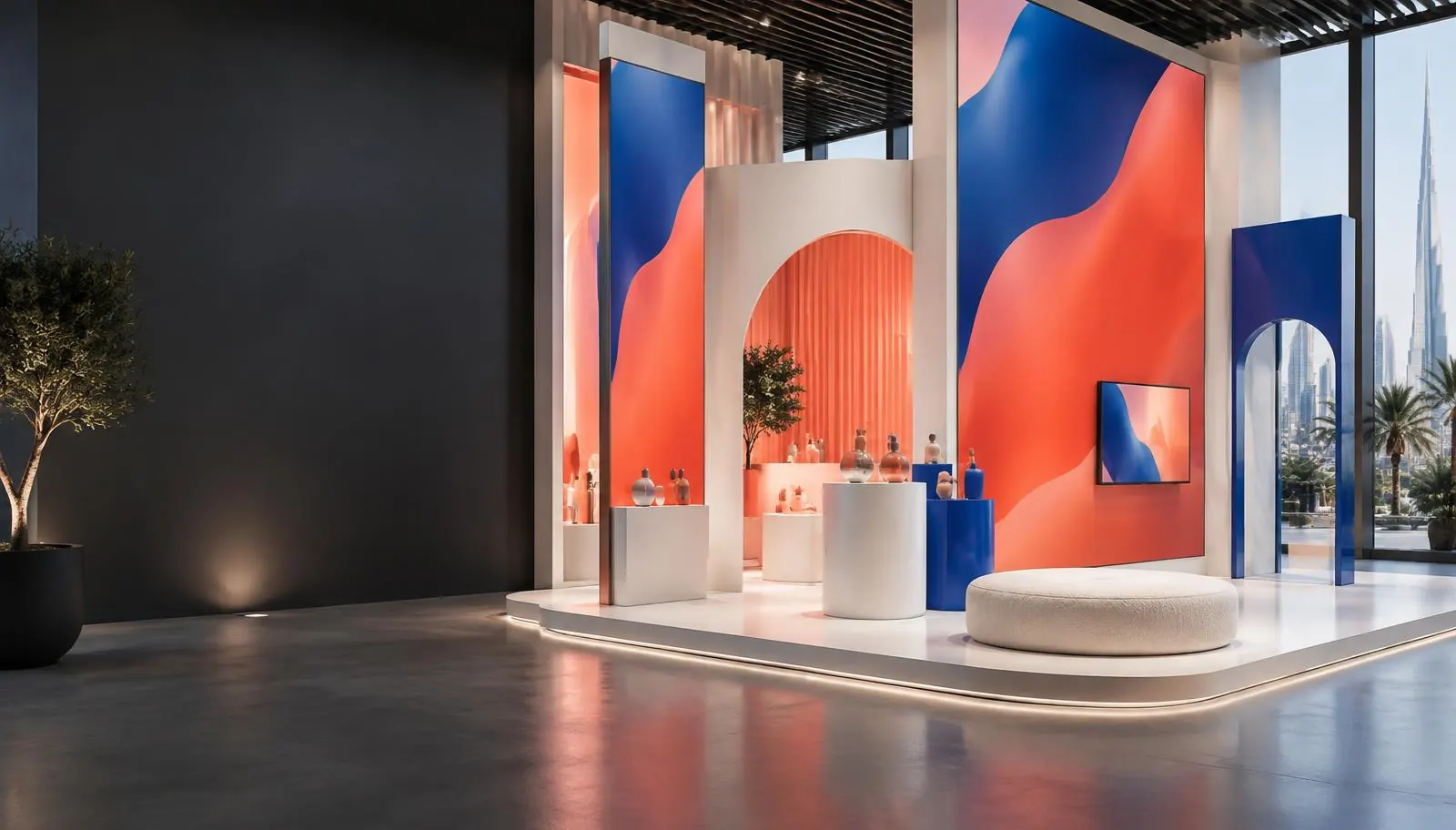
Distinguish a brand system from a campaign execution
A brand system establishes the enduring visual rules: identity, typography, colour, imagery and application principles. A campaign uses those rules to communicate a specific offer or moment. If your brief mixes the two, separate what must remain consistent from what can change for the launch. That decision helps prevent a temporary campaign design from unintentionally becoming a replacement corporate identity.
We can develop new applications around an approved brand or define a creative direction for a broader refresh. Explain which assets already exist, who owns them and why the present system is not meeting the business need. Before selecting concepts, agree the representative deliverables that will demonstrate the design in use, such as a presentation cover, exhibition graphic and product display treatment.
Build a hierarchy for more than one audience
An international business may need to speak to distributors, end users, partners and procurement teams. A single wall filled with all those messages rarely serves any of them well. Identify the primary audience for each application, then decide what information belongs at the first glance and what should be available after a conversation begins. Design should create a useful sequence, not simply increase visual impact.
For Dubai-facing materials, state the language needs and the markets represented in the brief. We use approved client information to structure the visual narrative. Product statements, market claims and regulated information require client approval. If several business divisions share the same display, establish the parent identity and the division hierarchy before adding individual product messages to every surface.
Creative direction across formats and dimensions
A campaign key visual needs enough flexibility to work on a horizontal screen, a tall display panel and a compact printed invitation. We develop a composition system rather than relying on one flattened image. The layout should specify how the main message, imagery and brand marks respond to different proportions, while preserving the identity's visual character and legibility.
List the final formats early, including screen dimensions, print sizes and any venue artwork requirements. If a production supplier changes a structure or panel size, update the artwork schedule before release. A multi-format creative package is strongest when the dimensions and intended viewing conditions are known. Otherwise, the last stage becomes a series of avoidable crops and improvised adaptations.
Presentations that support a commercial conversation
A presentation should make the offer understandable before asking the audience to evaluate detail. We can develop the visual structure of a corporate deck, product explanation or partner presentation using approved content. Clear chapter markers, readable diagrams and consistent layouts help speakers move through the story without placing every fact on a crowded slide.
Agree whether your team needs an editable template or a finished deck, and what software it will use. Include charts, image permissions and brand assets in the source material. If the presentation will be shown on a venue screen, review it at the intended aspect ratio and viewing distance. Files that look balanced on a laptop may be difficult to read from the back of a room.
Exhibition graphics as part of the identity rollout
An exhibition stand is a large-scale brand application with distinct practical constraints. The business name and purpose should be clear from the aisle; product areas should offer more focused detail; a meeting area should support conversation without visual clutter. We design the graphic hierarchy around the approved structure, display products and visitor routes, rather than covering every available wall with competing text.
The creative package may include fascia artwork, wall graphics, demonstration labels and supporting screen designs. Stand design and construction remain a separately defined production service. Provide the exhibitor manual and final drawings so artwork can respect panel joins, clearances and relevant organiser rules. The visual concept should be coordinated with the build before anything is printed or fabricated.
Branded spaces and product presentation
A branded environment can translate identity into materials, proportions and the way products are presented. Display fixtures, reception features and scenic elements should support the intended conversation. A product that needs hands-on inspection may require a different display arrangement from one shown through video or a guided demonstration. We develop the creative treatment around those actual uses.
Confirm the site dimensions, permissions, access windows and expected duration. Temporary showroom graphics and permanent environmental features need different specifications and approvals. If a project requires a launch reveal, live participation or daily activation operations, connect that requirement to the separate activation or event production scope. Designing the environment does not automatically include every operational service used inside it.
Brand guidelines your suppliers can actually apply
Guidelines are useful when they answer recurring production questions. Define logo clear space, minimum sizes, colour references, typography and representative layout principles. For a physical rollout, add examples of large-format applications, image handling and material considerations where relevant. The aim is to give different suppliers a consistent basis for decisions without requiring a new creative interpretation for every item.
Agree the source-file handover and the permissions needed to reuse photography, fonts and third-party assets. A guideline document does not transfer rights that the client or agency does not hold. Keep a clear record of approved assets and versions. This is especially helpful when several teams adapt the same creative system for different Dubai projects or a wider GCC programme.
Language and cultural review in the artwork stage
International campaign assets may need English and Arabic applications while retaining global brand rules. Plan the two languages together so typography, spacing and reading direction remain deliberate. Some messages need a different composition after translation; a literal copy-and-paste treatment can undermine both legibility and tone. The responsible client team should review the wording in its final application.
Names, product descriptions and sector-specific terms require particular care. Confirm who approves translations and who resolves differences between global and local wording. Include that review in the schedule before production files are released. This page upgrades only the existing English website content; Arabic project deliverables are defined in the brief and do not imply changes to the site's Arabic pages.
Production checks before the design leaves the screen
Colour, resolution, finish and material affect the final result. A luminous screen and a matte printed wall will not display the same artwork identically. We coordinate production-ready files with the chosen methods and use sample checks where the brief requires them. Artwork should be reviewed at realistic scale, with important details tested against the expected viewing distance.
Before release, confirm the quantity, dimensions, substrate and version for every application. Reconcile graphic files with fabrication drawings and screen specifications. The project needs named approval owners for copy, brand compliance and production interfaces. If a client changes an approved claim or image, assess all affected deliverables rather than updating one file while an older version continues into print.
Compare proposals by deliverables, not agency labels
A branding quotation can cover anything from a focused application refresh to a full identity system and physical rollout. Separate concept development, artwork adaptations, presentations, guidelines, print, fabrication and installation when comparing scope. Clarify the number of review stages, source-file handover and the client inputs required. An agency label alone tells you little about what will be delivered.
To start, send the business objective, audience, existing identity, required formats and target date through the homepage enquiry form. Include any venue specifications and a budget indication. We can then develop an achievable creative scope. Search rankings, lead volumes and campaign results are not guaranteed deliverables; the proposal should describe the design and production work that is actually being commissioned.
Frequently asked questions
How is branding different from brand activation?
Branding defines and applies the identity and communications system. Activation designs a participatory campaign experience and its live operation. The two can share creative assets, but they involve different responsibilities. Use the linked Dubai activation page if you need audience interaction, product demonstrations or operational campaign delivery.
Can you adapt a global brand for a Dubai exhibition?
Yes. Provide the global guidelines, approved assets, exhibitor manual and local content requirements. The scope can cover multi-format graphics and presentation applications while preserving brand rules. Any proposed exceptions or translated claims should be approved by the client before production.
Do you promise SEO or paid-media results?
No search-ranking or advertising-performance promise is made here. The service described is brand identity, campaign creative, presentation design and physical brand applications. Ongoing SEO, media buying or specialist marketing requirements should be identified separately rather than assumed to form part of a creative production brief.
Will we receive editable creative files?
Specify the source-file and template requirements at the proposal stage. Handover depends on the agreed deliverables and the rights attached to fonts, images and other assets. We establish what your team can reuse and adapt rather than treating every third-party licence as automatically transferable.
What information makes a Dubai brief actionable?
Send the audience, commercial objective, brand assets, list of formats, physical dimensions and delivery date. Include the approval owner and budget constraints. For a venue application, add access and material requirements. These inputs help us scope a coherent rollout instead of producing disconnected design items.
Define your Dubai brand rollout
Share your audience, brand assets, required applications and delivery date through our existing homepage enquiry form. We will clarify the creative and production scope with you.
Discuss your creative brief · info@the-concept.me · WhatsApp +973 3838 8827