Saudi Arabia · Jeddah
Branding & Creative Agency in Jeddah
Identity applications and environmental creative for hospitality, retail and exhibition settings in Jeddah.
The Concept WLL develops branding and creative applications for businesses connecting with audiences in Jeddah. We shape visual identity into the places and materials people encounter: welcome points, exhibition graphics, presentations, product displays and directional information. The work begins with what the audience needs to recognise and understand, then brings typography, imagery, materials and production detail into a coherent system.
For a hospitality business, lifestyle brand or exhibitor, the right design should feel appropriate to the setting without becoming a collection of generic coastal motifs. This page focuses on environmental identity and creative rollout, not a claim to operate every part of a retail campaign or event. The Concept is headquartered in Bahrain, with production capability in Riyadh and regional project delivery. Jeddah is a service location, not an asserted local office, client list or venue appointment.
Begin with the brand's role in the environment
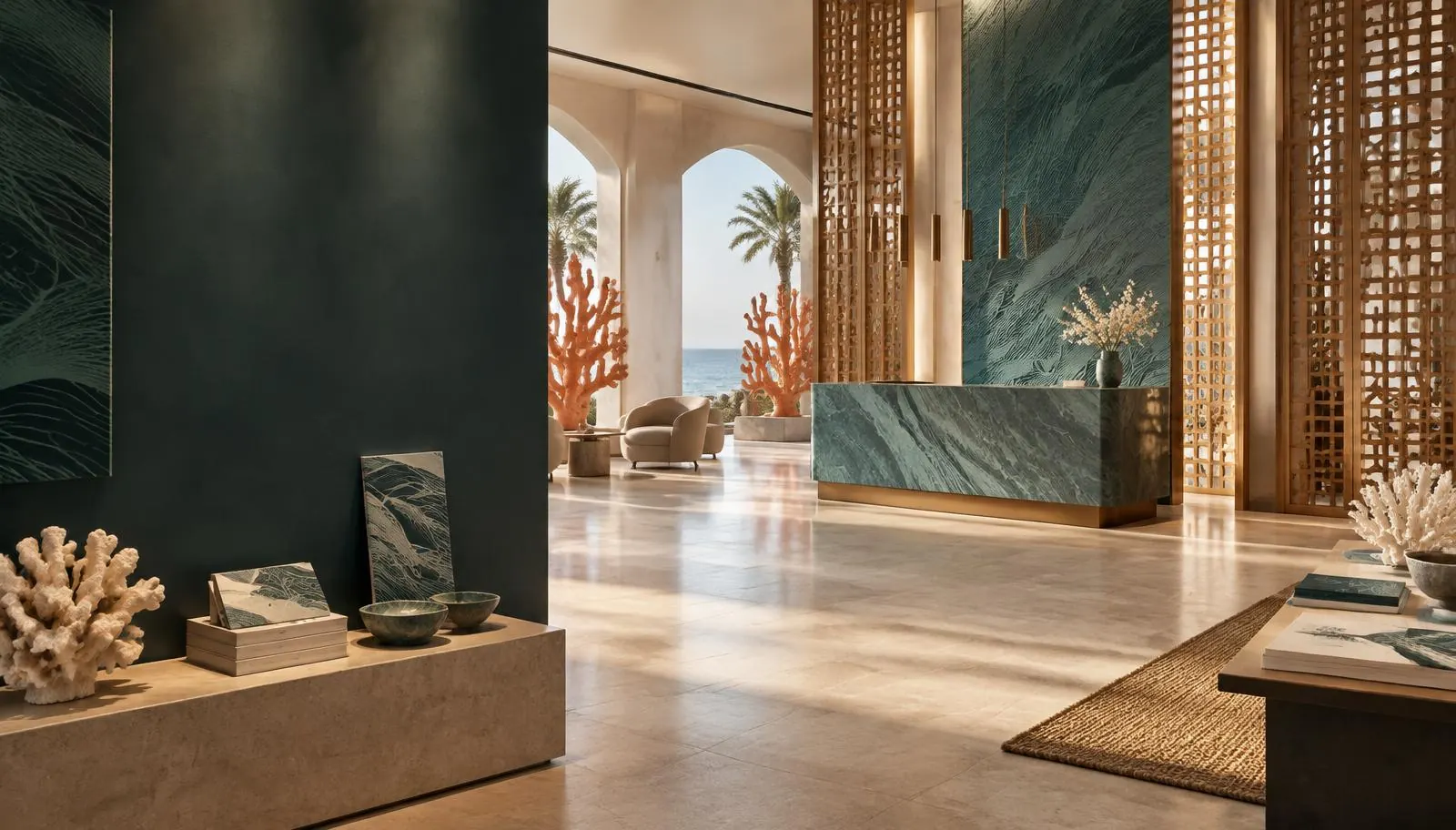
A brand can perform several jobs within the same setting. It may identify the business, welcome visitors, explain a product or help guests find a destination. Write those jobs into the brief before selecting colours and decorative features. For a Jeddah hospitality or retail application, the creative direction should reflect the actual audience and experience rather than relying on a familiar regional aesthetic alone.
Tell us what already exists and what is changing. A new product introduction may need campaign artwork without a new corporate identity. A refreshed reception environment may need an application system rather than a complete fit-out. Separating those needs keeps the scope precise and helps the client evaluate concepts against practical requirements as well as visual preference.
Identity applications for hospitality and lifestyle brands
Hospitality and lifestyle identities often appear across tactile, digital and spatial formats. A printed invitation, welcome sign and presentation backdrop should belong to the same visual family while doing different jobs. We develop the hierarchy, typography and image treatment around those uses, adapting an approved identity or creating the defined elements of a new visual system.
Choose representative applications for concept review. This might include a reception graphic, a small piece of collateral and a large-format display. Seeing the direction at different scales reveals whether the identity is workable beyond the logo. Confirm the required tone and any parent-brand rules before rollout, particularly where a hospitality operator or business partner must approve the final materials.
Environmental graphics with clear boundaries
Environmental graphics translate identity into a space through panels, wall treatments, display features and directional elements. They can make a temporary setting feel coherent or strengthen an existing branded environment. Define the permitted applications, dimensions and duration carefully. A temporary brand feature does not automatically include architectural modifications, permanent signage approvals or a full interior construction package.
For a Jeddah site, provide photographs, measured drawings and the operator's restrictions. Confirm whether surfaces can be covered, how items may be fixed and when installation can take place. We coordinate creative development with the specified production methods. Landlord, venue and consultant approvals should be assigned in the scope so the design is not released on the assumption that every application is permitted.
Campaign art direction for a specific occasion
Campaign creative gives a product launch, exhibition presence or hospitality occasion a recognisable visual theme. The direction should support an approved message and a clear audience, not merely create a dramatic backdrop. We develop key visuals and application layouts that can connect invitations, screen designs, printed collateral and branded display areas without forcing identical compositions into incompatible formats.
Agree which campaign elements can change and which identity rules remain fixed. Provide approved product imagery, messages and any partner marks. If the campaign extends to live participation or on-site operations, those services need their own defined responsibilities. Creative design can support a wider activation, but artwork development alone should not be mistaken for a complete operational programme.
Exhibition storytelling that makes the offer legible
An exhibition graphic needs to communicate from several distances. The main business identity should be recognised from the aisle, a clear offer should encourage a stop, and detailed material should be available at the demonstration or meeting point. We organise the creative around that hierarchy so a Jeddah exhibitor can communicate purpose without filling every wall with the same dense text.
Supply the organiser manual, final stand layout and product information before artwork adaptation. Large products, display screens and furniture can obscure planned graphics, so visual development should follow the actual installation. Stand construction is discussed through the separate Jeddah exhibition service. Here the focus is the identity, messaging and artwork that make the structure understandable and consistent with the wider brand.
English and Arabic design with equal attention
A bilingual brand application should be composed for both reading directions from the beginning. The relationship between English and Arabic may differ across a business card, a reception wall and a directional sign. Define that hierarchy rather than assuming one universal layout. We plan typography and spacing so the approved messages remain legible and the identity remains balanced.
Ask the responsible client team to approve translations, names and specialist terminology. The review should happen in the artwork as well as in the source text. A phrase can be correct but still break awkwardly across lines or compete with the brand mark. Allow room in the schedule for this review before print or fabrication files are released.
Material expression without decorative excess
Materials should reinforce the brand and the intended use of the installation. Matte finishes, translucent graphics, printed fabric or rigid display panels produce different visual results. We coordinate those choices with lighting, viewing distance and the available production methods. The strongest direction is not necessarily the most elaborate; a restrained system can communicate clearly when its details are well resolved.
For outdoor or exposed applications, state the actual site conditions and intended duration. Coastal location alone does not establish a material specification. The relevant supplier and site team need to confirm exposure, fixing requirements and maintenance arrangements. Sample review helps assess colour and finish where the approved brand needs consistency across several substrates or an existing environment.
Wayfinding as part of brand communication
Directional signs should reduce uncertainty, especially where guests move between arrival, registration, presentation and meeting areas. Establish the destination names and actual routes with the venue or operator. Then apply the brand system to a clear information hierarchy. Large decorative marks should not make essential directions harder to find or obscure mandatory safety information outside the creative scope.
Check sign positions from the guest's viewpoint. A layout that appears logical on a plan may be hidden behind furniture or visible only after a visitor has passed the decision point. If room allocations or programme names change, revise all affected graphics together. Keep temporary and permanent signage responsibilities separate so the final package aligns with the operator's approvals.
A controlled path from concept to finished artwork
Creative work progresses best when the approval sequence is clear. Start with the brief and representative concept applications, then develop the full artwork package against final dimensions. Consolidate feedback through an authorised client contact and distinguish visual preference from factual corrections or new deliverables. That prevents production work from beginning while fundamental decisions remain open.
Maintain a list of item names, dimensions, language versions and release status. A revised sponsor mark or product description can affect multiple outputs. Confirm which version is current before printing, fabrication or screen preparation. Changes after release should be reviewed for scope and timing consequences, rather than assumed to fit into the original schedule without affecting other deliverables.
Procurement inputs for a useful Jeddah proposal
Define the design and production outputs separately: identity applications, campaign key visuals, presentation layouts, print files, fabricated features and installation where required. Include quantities, sites and dates. If the work is reusable, specify storage, transport and artwork replacement needs. A proposal for one launch occasion is different from a recurring programme across several hospitality or retail locations.
Use the existing homepage enquiry form to share the objective, audience, approved assets and budget indication. Add site information and the person responsible for approvals. We can then clarify the deliverable list and connect the creative work with the relevant event or exhibition production discussion. No invented package price, venue relationship or guaranteed commercial result is needed to define a practical brief.
Frequently asked questions
Can you apply our existing identity to a Jeddah venue?
Yes. Provide the brand guidelines, permitted surfaces, measurements and operator restrictions. The scope can focus on temporary graphics and branded features rather than a new identity or complete fit-out. We identify the relevant approvals before preparing the production package.
Do you create exhibition graphics as well as brand identity?
Both can be included in a defined creative assignment. Exhibition artwork should follow the approved stand dimensions and visitor hierarchy. The separate Jeddah stand service covers construction and installation responsibilities; the creative brief covers the brand expression, messages and production-ready graphic files.
Will the designs be bilingual?
English and Arabic applications can be specified in the project scope. Plan translation ownership and language hierarchy before layout approval. The client approves the final wording, while we coordinate typography and application design. This upgrade does not alter the existing Arabic website page.
Do you provide a Jeddah office or venue-approved supplier service?
This page does not claim either. The Concept is headquartered in Bahrain and has production capability in Riyadh, with regional project delivery. Site coordination and installation arrangements are agreed for the actual project, without implying a local office or official appointment by an organiser.
How should we brief a hospitality brand rollout?
List the guest touchpoints, approved identity, application dimensions, language versions and delivery date. Include the venue rules and examples of existing materials. Specify what needs design only and what also needs printing, fabrication or installation so the proposal can be compared on a clear scope.
Shape your Jeddah brand environment
Share your audience, brand assets, required applications and delivery date through our existing homepage enquiry form. We will clarify the creative and production scope with you.
Discuss your creative brief · info@the-concept.me · WhatsApp +973 3838 8827