Conference Stage Design and Production in Qatar
Conference stages for summits, forums and corporate conferences in Doha and across Qatar — scenic design, staging, speaker furniture, screen and lighting integration and show-day support, produced by a team that travels from our Bahrain headquarters and Riyadh production house.
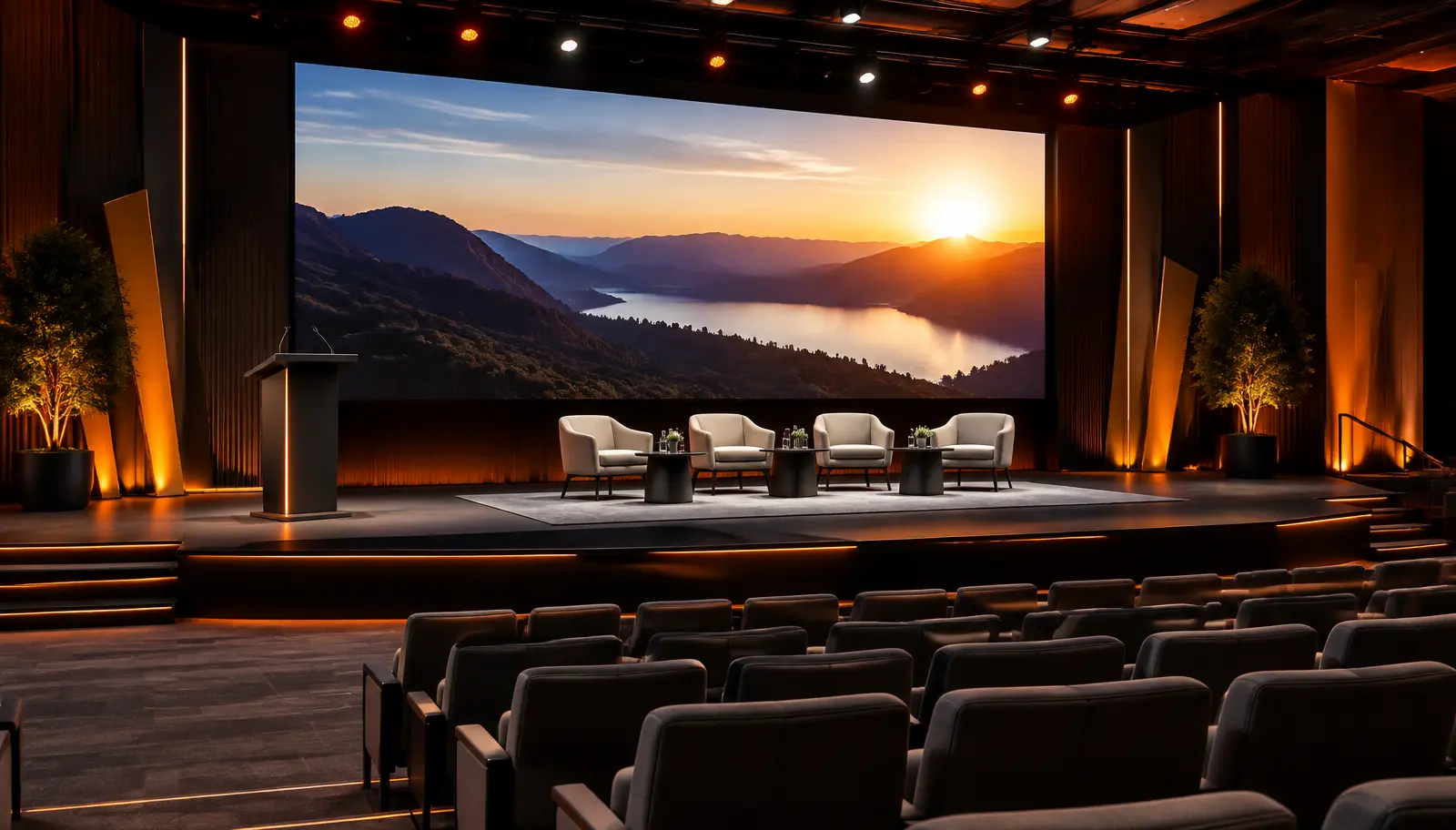
A conference stage is a working platform before it is a backdrop. It has to serve keynotes, panels, signings, interviews and award moments — often within the same day — while giving every delegate a clear view and every camera a clean frame. The best conference stages are the ones delegates stop noticing, because everything on them simply works: the sightlines, the sound, the screens, the furniture and the movement between sessions.
The Concept WLL designs and produces conference stages in Qatar for organisers who want the stage built around their programme rather than their programme squeezed onto a generic stage. We are headquartered in Bahrain with a production house in Riyadh, and our team travels to Doha and other Qatari venues for each event. This page explains how we design a conference stage, what production involves and what to send us for a proposal.
The stage serves the programme, not the other way round
Conference stage design begins with the agenda. A keynote needs a confident central position and clean framing. A panel needs furniture arranged for conversation and sightlines. A signing ceremony needs a table, a document and a camera position. A moderated interview needs intimacy without losing the back row. We map every session format in the programme first, then design a stage that moves between them with minimum fuss.
Changeovers are designed, not improvised. Furniture positions are taped, panel resets are rehearsed, and anything that must move between sessions has a defined place to move to. For multi-day conferences, the set is designed so the room can be re-dressed between days without a rebuild, keeping overnight work proportionate to what actually changes.
Scenic design and visual identity
The scenic design carries the conference identity: the backdrop, the lectern, the panel furniture, the screen surround and the branded surfaces that appear in every photograph and recording. We develop the look from your brand guidelines and the event’s creative direction, presenting mood boards and 3D views so decision-makers can approve the stage before anything is fabricated.
Materials and finishes are chosen for the camera as much as for the room. Highly reflective surfaces can flare under stage lighting, fine detail can disappear on a wide shot, and colours shift under different colour temperatures. We review finishes against the planned lighting and camera positions, and produce artwork at the resolution the final print size demands.
Sightlines, seating and screen placement
A stage that looks right in a render can fail in the room if sightlines are not checked. Columns, screen positions, the production desk and even the height of the stage edge all affect what delegates can see. We review the venue plan and the seating layout together, checking what the front rows, side seats and back rows will actually see, and position screens so no section of the audience is reading over a shoulder.
Where the conference is recorded or streamed, camera framing joins the sightline check. Wide shots, close-ups and audience cutaways each frame the stage differently, and a backdrop that balances beautifully from the centre aisle can crop badly through a lens. We coordinate with the camera team before fabrication so the set works for both the room and the recording.
Stage engineering and venue coordination
Conference stages carry real loads: presenters and panels, lecterns and furniture, LED walls, lighting fixtures and the crew who move among them. Platforms, ramps, stairs and handrails are engineered with loadings calculated before fabrication, and structural elements are documented for the venue’s review. Approval decisions rest with the venue and relevant authorities; our job is a complete and early submission.
Doha’s conferences run across convention centres, hotel ballrooms and institutional venues, each with its own rules on rigging, floor loadings, fixings and working hours. We coordinate with venue operations from the design stage — confirming load-in routes, freight access, rigging points and permitted working windows — so the stage is designed around the venue’s actual constraints.
AV, lighting and the technical interfaces
The stage is where the technical systems meet the audience, and the interfaces have to be planned, not discovered. Screen dimensions and positions, presenter lighting, microphone positions, confidence monitors, countdown timers, playback and live camera feeds are all reconciled with the set drawings before fabrication closes. Cable routes are hidden in the structure, and service access is planned so a technician can reach a processor without walking through the shot.
Where interpretation, recording or streaming are part of the programme, we plan their physical needs into the same layout: camera platforms with clear sightlines, positions for interpretation booths where required, and the cable infrastructure each system needs. One coordinated plan is what stops the final load-in window becoming a negotiation between suppliers.
Speaker experience and backstage flow
Conferences succeed or stumble on how speakers are handled. Presenter entrances, green room positions, microphone handovers, panel transitions and the route from backstage to the lectern are planned into the stage design, so a speaker walks on confident rather than navigating cables in the dark. Accessibility requirements are part of the brief from the start and coordinated with the venue.
During the show, a stage manager runs the movement: calling sessions, managing presenters, coordinating with the show caller and keeping the programme on time. Rehearsals are scheduled so every speaker who wants a run-through gets one, and every changeover the programme needs has been practised before the audience arrives.
Briefing us for a Qatar conference proposal
To prepare a useful proposal we need the conference dates, the venue if confirmed, the expected audience and seating layout, the programme formats the stage must serve, and any brand guidelines or past event references you would like us to see. Venue drawings help, as does a budget range — we will tell you honestly what it achieves rather than design to a number we invent.
We respond with a creative direction, a technical approach and an itemised cost breakdown separating design, fabrication, technical production and on-site crew. If your organisation already has a creative agency, we are equally happy to produce from their approved designs; if you need full conference management beyond the stage, our conference production services are linked below.
Conference stage production scope we deliver in Qatar
- Stage and scenic design from the conference programme
- Technical drawings, engineering and venue submissions
- Staging, platforms, ramps, stairs and accessibility provisions
- Backdrops, lecterns, panel furniture and branded surfaces
- Screen, lighting and sound integration with the set
- Confidence monitors, timers and presenter systems
- Rehearsals, stage management and show-day crew
- Multi-day re-dressing, strike and venue handover
How a conference stage production runs
Brief & programme review
We map the session formats, audience layout and venue constraints.
Design & approval
Mood boards, 3D views and technical drawings for sign-off.
Fabrication
The set is built and dry-assembled in our workshops before transport.
Load-in & integration
Stage installed and reconciled with screens, lighting and sound.
Rehearsal & show
Speaker run-throughs, then stage management through the programme.
Strike
Timed dismantling and clean venue handover.
Conference stage production in Qatar: frequently asked questions
Do you have an office in Qatar?
No. The Concept WLL is headquartered in Bahrain with a production house in Riyadh. Our team travels to Doha and other Qatari venues to design, install and run each conference stage.
Can you work with the venue’s in-house AV?
Yes. We can integrate with venue systems, supplement them where they fall short of the programme’s needs, or provide the full technical production ourselves — whichever serves the event best.
Can you build from our agency’s stage design?
Yes. We regularly produce from third-party designs, reviewing drawings for structural and practical issues and fabricating to the approved specification.
Can the stage change between sessions or days?
Yes. We design for the changeovers the programme needs — rehearsed furniture resets between sessions and proportionate re-dressing between days of a multi-day conference.
How is accessibility handled?
Accessibility requirements are part of the brief from the start. Ramps, access routes and presenter movement are planned into the design and coordinated with the venue.
Do you support recorded or streamed conferences?
Yes. We plan camera platforms, framing and lighting with the production team so the stage works for the recording as well as the room.
How early should we start the conversation?
Earlier is always safer, particularly where venue approvals or custom fabrication are involved. Share your dates and we will confirm honestly what the timeline allows.
Related pages
- Conference and forum production
- Conferences and summits
- Stage, set and scenic production
- Event production company in Doha
- Event management company in Doha
- Event company in Qatar
Photo: AI-generated illustration