Saudi Arabia · Dammam
Event Production Company in Dammam
Stage, sound, lighting and video designed around your programme, with technical rehearsals and a clear production scope.
The Concept WLL provides event production in Dammam: design, fabrication, AV, installation and live technical operation for your agreed event programme. We connect stage and set decisions with the screens, sound, lighting and crew needed to make the presentation work.
Use this page for a production-led enquiry in Dammam, whether your internal team or agency has already developed the event. The plan starts with the real venue, audience, content and access windows; equipment and scenic choices follow those requirements.
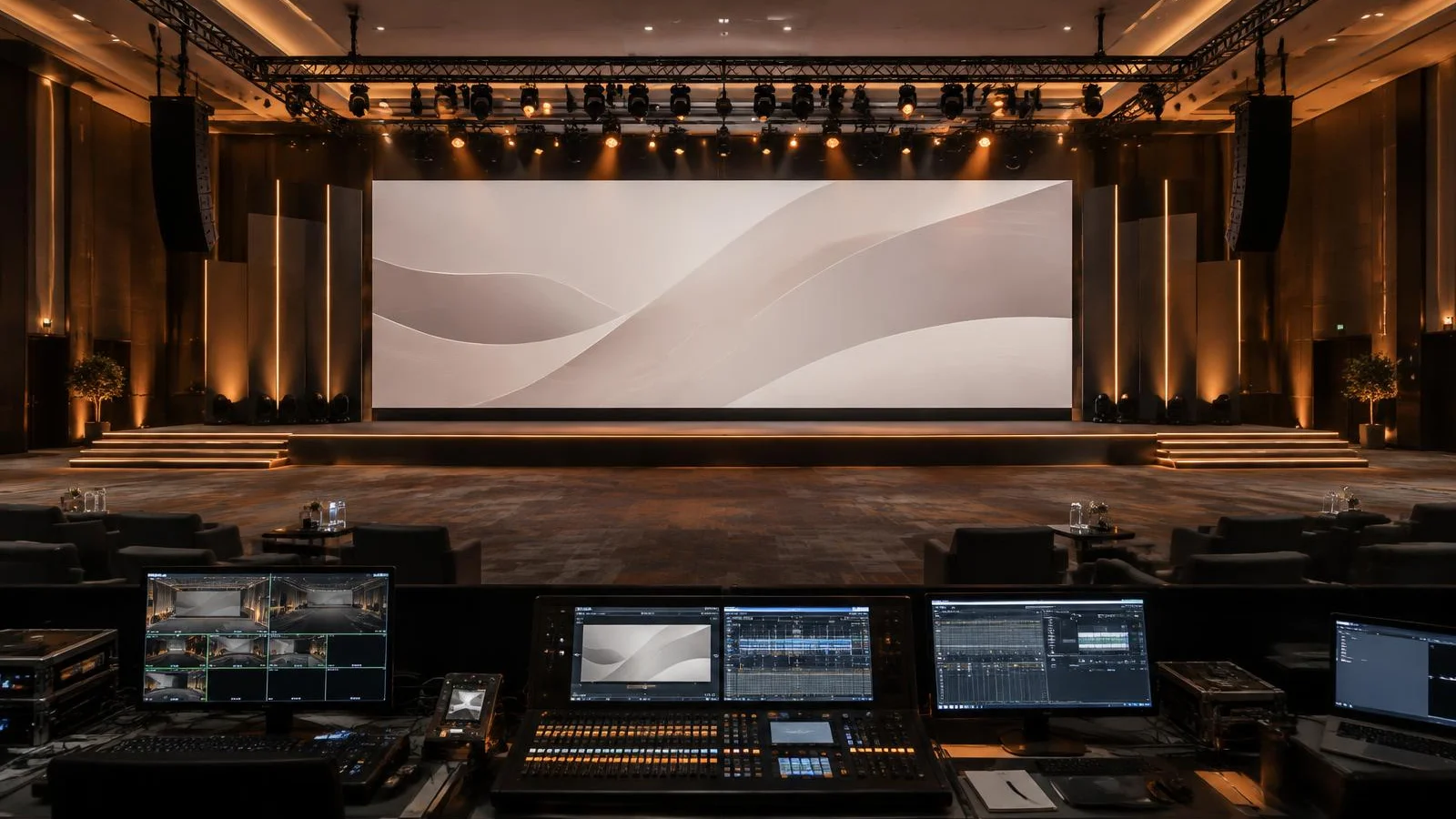
Dammam production briefs for trade and corporate audiences
An event production company in Dammam should turn an industrial or corporate brief into a clear technical plan. A supplier meeting may need precise speech coverage, bilingual slides and a filmed presentation rather than a concert-style spectacle. An exhibition presentation may instead need a stage that can remain usable while neighbouring stands are operating. The Concept WLL provides design, fabrication, AV and on-site production for these formats, with the proposal based on your actual audience and venue.
Dammam and Dhahran should not be treated as interchangeable venue names. Dhahran Expo is a specific venue serving the Eastern Province, while a company auditorium, hotel meeting space or privately controlled site has its own requirements. Give the venue name and location with your brief so transport, technical coordination and the site visit follow the correct address. If you have not selected a venue, we can outline the production information you should request before making that choice.
Exhibition presentations and demonstrations at Dhahran Expo
Dhahran Expo publishes spaces for trade shows, meetings and other formats. That makes the exhibitor or organiser manual an important starting point for a technical production brief. Confirm whether the stage belongs to the organiser, a sponsor or an individual exhibitor; the approval route and allowable installation window may differ. Supply the allocated plan, build access, permitted sound levels, power order and rules for suspended elements before requesting a final technical quotation.
A live demonstration needs more than a screen and microphone. Decide how visitors approach, where the presenter stands, which product components must remain visible and whether a camera close-up is needed. Protect clear circulation around the demonstration rather than expanding the set into visitor routes. If the programme includes machinery or operational samples, define the client's specialist supervision and isolation procedures. We plan the event production around those boundaries without claiming organiser appointment or prior work at a named show.
Corporate-site briefings and operational continuity
For a Dammam corporate-site event, the building may continue operating while the production is installed. Discuss delivery security, working-hour restrictions, lift access, equipment screening and the route between the loading point and event room. These details influence crew shifts and packaging as much as the stage drawing. Include the building contact who can confirm access, and avoid scheduling a rehearsal on the assumption that the room is available throughout the preceding day.
Where a technical presentation contains confidential business information, identify who supplies it and who can distribute it. Use an agreed file-transfer process and a final version list for playback, recording and live feeds. A simple podium event still needs microphone backups, a presentation operator and a plan for audience questions. For larger programmes, breakout rooms and overflow audio should appear as explicit items rather than become unexpected additions after the main stage has been priced.
Industrial launch films and executive presentations
A production package for an industrial launch in Dammam can combine a product film, executive remarks, a demonstration and photography. Each element has a different viewing requirement. A bright product area may need separate lighting from the presentation screen, while a filmed demonstration may need a close-up camera and a safe crew position. Agree the sequence early so the set can support the programme without being rebuilt between moments.
For bilingual audiences, check how Arabic and English appear in presentation templates, lower thirds and directional graphics. Confirm whether interpretation is simultaneous, consecutive or unnecessary. Technical coordination should cover the audio feed to interpreters and the presentation information they receive, but the appointment of interpreters remains an agreed separate responsibility. The aim is a programme that can be understood and followed, not a set made busier by adding every possible technology.
Dammam quotation and delivery checklist
Send the date, site address, audience number, event format, available floor plan and main content requirements through the existing enquiry form. Add known load-in and load-out periods, proposed rehearsal time and whether recording is needed. When the site details are incomplete, distinguish a working allowance from a final approved production scope. That avoids comparing an early estimate with a quotation based on a full technical survey.
Compare proposals by stage dimensions, screen specification, audio coverage, lighting purpose, operator roles and crew shifts. Look for exclusions such as venue power, rigging points, internet, security and overtime. Budget is determined by the programme and delivery conditions; an unsupported standard price would not help you select the right system. Our Dammam event-management page covers broader planning, while this page focuses on the stage, technical systems and crew needed to deliver the live programme.
LED walls, playback and presenter confidence
Indoor and outdoor LED, content servers and switching are planned as one video chain. Start with what the audience needs to read: a product detail, a financial chart, a speaker or a full-screen film. The nearest viewing distance, ambient light and camera position help determine the screen specification. A wide canvas is useful only when the content team has the correct dimensions and safe areas; stretching a standard presentation across it can make important information harder to follow.
Agree the screen layout and pixel map before animation begins. List every source, including slides, live cameras, remote presenters and branded holding loops. Confidence monitors should give presenters the right information without distracting the audience. For IMAG, recording or streaming, confirm which feeds carry presentation graphics and which remain clean. Test the actual files on the playback system, protect a backup for critical moments, and record who can approve last-minute revisions.
Sound, lighting and an intelligible live programme
Line-array sound, monitor systems and broadcast splits belong in the production discussion alongside intelligent lighting. System selection follows the room and programme, not an equipment list chosen before a site review. A spoken conference needs even coverage and reliable microphones; music and live performance introduce different monitoring and headroom requirements. Account for interpretation, audience questions and recording feeds before deciding how many inputs and operators are required.
Lighting must support both the person in the room and the person watching a camera feed. Separate presenter lighting from scenic effects, specify camera-compatible colour settings and check reflections on screens, lecterns and glossy products. Moving heads, washes and atmospheric effects can support reveals, but any effect that depends on venue permission is confirmed before it enters the cue script. A restrained, well-rehearsed lighting change often communicates a product reveal more clearly than constant movement.
Stage construction, power and suspended loads
Stage, truss and rigging decisions are made together. Draw the presenter route, accessible approach, stair positions, backstage storage and scenic masking before fabricating the set. Ground-supported and suspended structures need different calculations and access arrangements. The venue reviews the permitted load, points and installation method; previous approval for a similar event is not a substitute for the current technical submission. Keep exit routes and firefighting access clear throughout the build and show.
Power and infrastructure cover load planning, distribution and the temporary supply required by the agreed systems. Separate sensitive playback equipment from heavy loads where the electrical design requires it. Identify cable routes, protective ramps and emergency isolation responsibilities. Generators, backup supply and weather protection are specified against the venue and risk assessment rather than assumed to be included everywhere. The quotation should show what is provided, what is venue-supplied and which changes would affect the price.
Show control, broadcast and rehearsal readiness
Timecode, multi-camera, image magnification and streaming workflows are coordinated with stage management and the show caller. A cue sheet names the trigger, action, responsible department and fallback for every significant moment. Confirm who calls the start of each video, who releases a speaker and what happens if a remote connection fails. For streamed events, client account access, recording permission and the intended audience are settled before testing begins.
Protect time for line checks, content tests and a technical rehearsal before opening. A production schedule should distinguish rigging, scenic installation, sound checks, lighting focus, camera checks and presenter rehearsal rather than call them all setup. Record the final approved programme and circulate changes to every operator. After the event, organise recordings and agreed files, remove equipment safely and document venue handover. This technical production service can work alongside your agency or internal team without replacing their event-management role.
Frequently asked questions
What does event production in Dammam include?
The agreed scope can include stage and scenic design, fabrication, LED and video, sound, lighting, rigging coordination, power planning, show control, installation, rehearsal and dismantle. The proposal identifies each department and operator rather than leaving technical delivery undefined.
Can you work with our existing agency or internal event team?
Yes. Bring your creative brief, programme and approved content. We translate them into a technical plan, agree the handovers with your team and venue, and keep changes under a clear approval process.
How is production priced?
Cost follows the stage and system design, content requirements, access conditions, crew shifts and live duration. Request an itemised estimate rather than use an unverified standard price; venue-controlled services and exclusions should be explicit.
Can you include recording, IMAG and streaming?
These workflows can be included alongside the stage system. Confirm the required camera feeds, recording permissions, platform and connection before quotation so playback, switching and audio are designed together.
What should we send with the enquiry?
Send your venue and date, audience size, floor plan, programme, content needs, rehearsal window and any technical rider. If a detail is not settled, mark it as provisional so it is not mistaken for an approved specification.
Plan your Dammam technical production
Send the venue, date, audience size and programme through our existing enquiry form. Add plans and content requirements when available.
Request Event Production · info@the-concept.me · WhatsApp +973 3838 8827