Saudi Arabia · Corporate events
Corporate Event Company in Saudi Arabia
Planning or production support for annual meetings, leadership offsites, sales conferences, launches and staff events across the Kingdom, with an in-Kingdom production house in Riyadh.
Corporate events in Saudi Arabia sit inside a wider set of constraints than a typical consumer activation: shareholder and governance requirements for AGMs, brand and legal sign-off for product launches, HR and internal communications approval for town halls and recognition nights, and a calendar shaped by Ramadan, National Day and the Saudi fiscal year. A company searching for a corporate event company in Saudi Arabia is usually not looking for a party planner — it is looking for a partner who understands procurement, scope definition, run-of-show discipline and how to keep a brand consistent across every touchpoint a corporate audience sees.
The Concept WLL is headquartered in Manama, Bahrain, with a in-Kingdom production house in Riyadh. That structure lets a bilingual team manage the planning, procurement conversations and creative direction from one place, while production, staging, AV/LED/sound/lighting delivery and scenic and set fabrication are handled through the Riyadh base for projects delivered inside Saudi Arabia. The same team supports brand activations, registration and check-in, hospitality coordination, and corporate gifts as part of the same brief.
This page focuses specifically on corporate event formats — the recurring meeting types that finance, HR, communications, sales and executive offices run every year — rather than general event management or a single-city service page. For city-specific scope and venue logistics in the capital, see the dedicated page on event management in Riyadh.
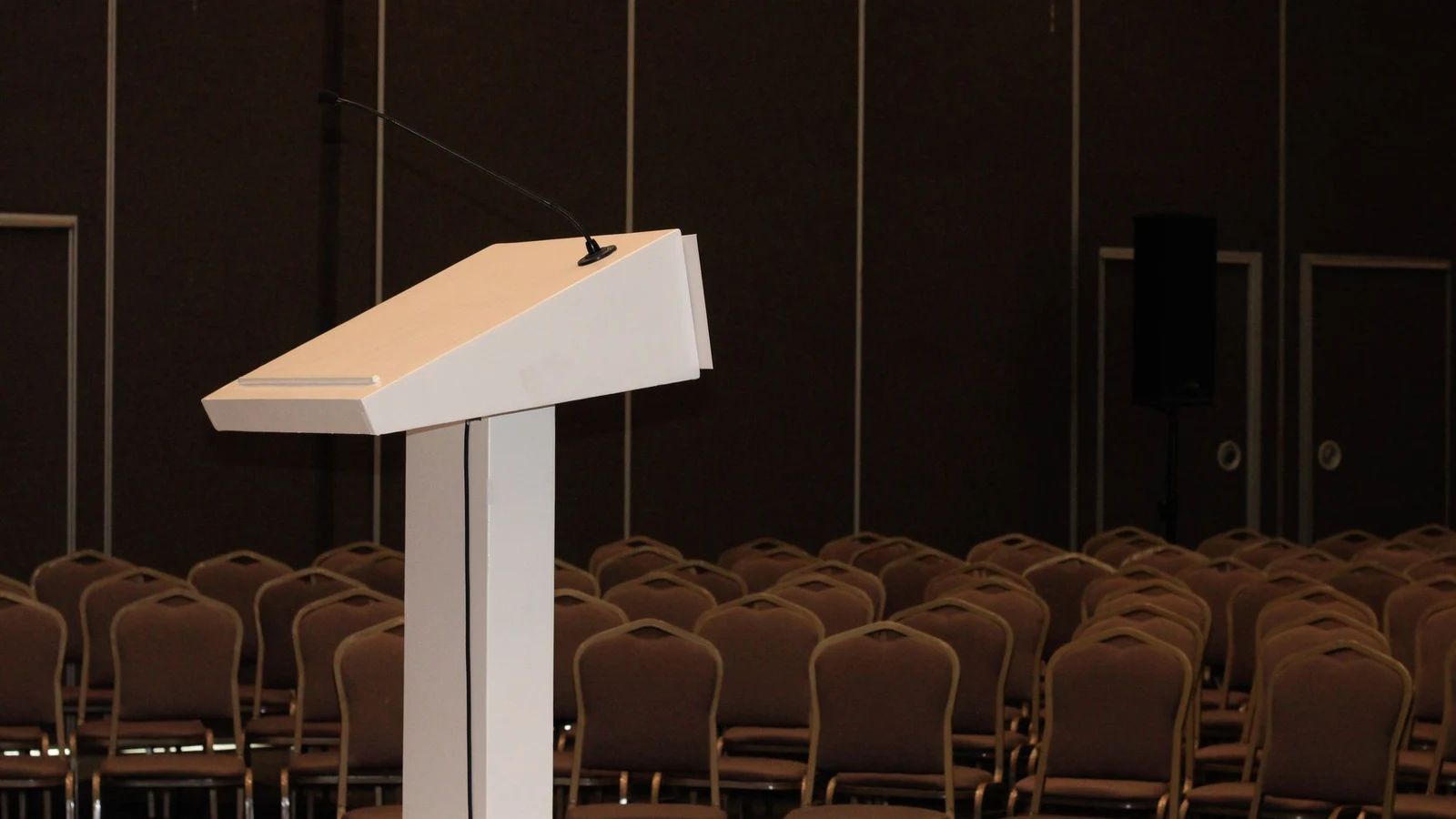
Corporate formats we plan and produce
Each corporate format carries its own compliance requirements, audience expectations and risk profile. A shareholder meeting is judged on procedural accuracy and clarity; a product launch is judged on timing and media impact; a staff recognition night is judged on morale and tone. Treating all of them as "an event" without distinguishing the format is where briefs go wrong — the run-of-show, the decision points and the sign-off chain are different in each case.
The sections below describe what typically matters for each format, the production elements usually involved, and where decisions tend to get made or delayed.
Annual general meetings and shareholder meetings
AGMs require procedural accuracy above spectacle: a clear agenda, accurate voting and quorum mechanics, a stage layout that supports the board and company secretary, and microphone and camera coverage that captures questions from the floor without delay. Decision points usually involve legal and investor relations teams early, since the script, slide content and Q&A handling need their sign-off before the room is built. Hybrid or streamed delivery is increasingly requested so shareholders who cannot attend in person can still follow and, where applicable, vote.
Leadership offsites and kick-offs
These combine a working agenda — strategy sessions, breakout rooms, workshop facilitation space — with a more relaxed tone than a public-facing event. Production needs are usually modest: good screens, reliable audio for breakout rooms, clear signage, and a run-of-show that keeps sessions on time. The main planning variable is the balance between structured content and informal time, which is a decision for HR or the executive office rather than the production team.
Sales conferences
Sales conferences tend to need a stronger stage presence — main-stage AV, award or recognition segments for top performers, and breakout tracks by region or product line. Timing discipline matters because sales teams are often pulled away from client coverage to attend, so sessions need to start and end as scheduled. Lead capture or registration data from the event is frequently fed back into CRM systems, which should be agreed with sales operations before the event, not after.
Product and service launches
Launches usually have a hard date tied to a market or regulatory announcement, which makes the production schedule the controlling factor. Brand guidelines, legal review of claims made on stage or in signage, and media or press list coordination typically run in parallel with staging and AV planning. A decision point that is easy to miss is who has final sign-off on stage content if marketing, legal and the executive sponsor disagree close to the date.
Client and partner appreciation dinners and galas
These formats are judged on guest experience and tone rather than content density: seating and table planning, hospitality coordination, gifting, and a run-of-show that moves smoothly from arrival to the close of the evening. Guest list management and RSVP tracking are usually the first thing to slip if they are not owned clearly by one team, so registration and check-in should be assigned early.
Staff and annual parties, recognition nights
Internal celebration events depend on HR and internal communications alignment — the tone, the recognition criteria, and who is called to the stage all need to be agreed before the script is written. Production elements are typically staging, lighting and sound for a presentation segment, plus entertainment and catering logistics. Duty of care for staff transport and, where alcohol-free hospitality applies, catering choices should be confirmed with HR policy rather than assumed.
Ramadan iftars and suhoors for staff and clients
Ramadan hospitality events run on a compressed evening timetable around sunset, so run-of-show timing is built around the adhan rather than a fixed clock time. Seating, catering and prayer space logistics need early confirmation with the venue, and client-facing iftars often double as a relationship-building touchpoint rather than a content-heavy programme. Booking lead time matters here because venues and catering slots fill quickly across the month.
National Day and Founding Day internal celebrations
As internal celebration formats, these typically combine brand-appropriate decor, a short programme and staff engagement activities within office or venue space. Brand compliance review matters because national symbols and colour use are visible externally if photographed and shared, so marketing or communications sign-off on decor and signage is a sensible step before production begins.
Dealer and distributor meetings
These combine a conference-style agenda with incentive or recognition elements for top-performing partners, often run annually or twice a year. Registration, badge and seating logistics by tier or region are common requirements, along with a stage segment for leadership updates and partner recognition. Alignment between sales, marketing and finance on incentive announcements should happen before the agenda is finalised.
Press conferences and signing ceremonies
These are short, high-precision formats where timing, backdrop branding and media logistics matter more than scale: press registration, designated photo and interview areas, correct flag or logo placement for signing ceremonies, and a tightly scripted run-of-show. Legal or government relations teams are usually involved in approving the exact wording used on stage and in any signed documents displayed to camera.
Internal communication and town halls
Town halls are communications-led: the agenda, Q&A format and any pre-recorded content usually come from the internal communications team, with production support for staging, audio and a live or streamed Q&A mechanism. For organisations with staff across multiple sites, hybrid delivery with reliable streaming and a moderated question queue is typically the main technical requirement.
Hybrid and streamed events
Any of the formats above can be delivered with a streaming layer for remote attendees — shareholders, staff in other cities, or partners unable to travel. The planning questions are consistent regardless of format: stream quality and redundancy, how remote attendees ask questions or vote, and whether recorded content needs post-event editing for internal distribution or compliance records.
Production elements behind a corporate run-of-show
Behind every format above sits a similar set of production building blocks, scaled up or down according to the event. Staging and scenic or set fabrication define the physical space — a stage for a conference, a backdrop for a signing ceremony, a dining layout for a gala. AV, LED, sound and lighting delivery determine how the content is seen and heard, from a single screen and microphone for a town hall to a full LED backdrop for a launch.
Registration and digital check-in matter for any format with a guest list that needs tracking — AGMs for shareholder verification, galas for seating, conferences for badge printing and session access. Hospitality coordination covers catering, seating and guest flow, and corporate gifts are frequently part of the brief for client dinners, dealer meetings and recognition nights. Brand activations can sit alongside a conference or launch as a separate engagement zone, for example a product demonstration area at a sales conference.
Deciding which of these elements a given event actually needs — rather than defaulting to the full list — is usually the first scoping conversation, since it has the largest effect on both budget and lead time.
Scope, procurement and the RFP process
Corporate buyers in Saudi Arabia increasingly run a formal RFP process even for mid-sized events, particularly inside larger organisations and government-linked entities with procurement policies. A clear RFP typically states the event format, expected attendance, date and venue (if fixed), required services, brand guidelines to follow, and the evaluation criteria the buyer will use to compare proposals. Vague RFPs tend to produce quotes that cannot be fairly compared, because each vendor fills gaps with different assumptions.
When comparing quotes, it helps to separate recurring commitments from one-off production costs: AV and staging are usually priced per event, while registration platforms, gifting and hospitality can be priced per head. Asking vendors to itemise their scope against the same line items — rather than accepting a single lump sum — makes it possible to see where proposals genuinely differ.
Contracts for corporate events typically define payment milestones tied to project stages: on signing, on confirmation of the production design, and on completion, with the exact split depending on the scale and lead time of the project. Confirming cancellation and postponement terms in writing before the contract is signed avoids disputes if a date changes for reasons outside either party's control.
Brand compliance and HR/communications alignment
Corporate events are one of the few environments where marketing, HR, legal and the executive office all have a stake in the same room at the same time. Brand compliance covers logo use, colour palette, tone of voice on stage and in signage, and approval of any claims made publicly — all of which typically need sign-off before production begins rather than at rehearsal. For multinational organisations, this often means reconciling global brand guidelines with local Saudi market expectations and Arabic-language copy.
HR and internal communications alignment is equally important for staff-facing formats: who is recognised on stage, what is said about performance or restructuring, and how sensitive announcements are handled if they coincide with the event date. Agreeing these points before the script is written avoids last-minute content changes that put pressure on the production schedule.
Measuring outcomes
What counts as a successful corporate event depends on the format. For AGMs and conferences, attendance against registration, session engagement and Q&A participation are the usual indicators. For sales conferences and dealer meetings, lead or pipeline data captured through registration or CRM integration is often the measure that matters most to the sponsoring department. For staff events, informal feedback and attendance at future internal events are common proxies for morale impact.
Agreeing which of these metrics will actually be tracked — and who owns collecting them — before the event takes place makes post-event reporting straightforward rather than an afterthought.
Duty of care
Corporate events carry a duty of care obligation toward attendees that is easy to overlook when the focus is on content and production. This covers staff and guest transport arrangements, particularly for evening events; venue safety and capacity limits; catering allergen information; and a clear point of contact on-site if something goes wrong. For events during Ramadan or extending into late evening, transport and timing planning needs particular attention given changed working hours and prayer times.
Working with a bilingual team
Most corporate events in Saudi Arabia need both Arabic and English handled accurately and consistently — on signage, in scripts, in registration forms and in any materials sent to shareholders, staff or media. A bilingual team reduces the back-and-forth of translating and re-checking content late in the process, and helps keep tone consistent across both languages rather than treating the Arabic version as an afterthought.
The Concept WLL's Bahrain-based team and Riyadh production house work together on planning, creative direction and delivery, so that both languages are handled from the start of a brief rather than added at the end.
Getting started
A useful first step is a short written brief covering format, expected attendance, date range, city, and which of the production elements above are in scope. That is usually enough for an initial scoping conversation and, where needed, a formal proposal that can be compared against other quotes using the same structure.
For a Riyadh-specific view of venues and city logistics, see the dedicated event management company in Riyadh page. To start a conversation about a specific format, use the contact details below or request a proposal.
Frequently asked questions
What corporate event formats do you support in Saudi Arabia?
We support annual general meetings and shareholder meetings, leadership offsites and kick-offs, sales conferences, product and service launches, client and partner appreciation dinners, staff and annual parties, Ramadan iftars and suhoors, National Day and Founding Day internal celebrations, dealer and distributor meetings, press conferences and signing ceremonies, town halls and internal communication events, and hybrid or streamed formats.
Do you have a production base inside Saudi Arabia?
Yes. The Concept WLL is headquartered in Manama, Bahrain, with a in-Kingdom production house in Riyadh that supports staging, AV/LED/sound/lighting delivery and scenic or set fabrication for events delivered inside Saudi Arabia.
How should we structure an RFP for a corporate event?
State the event format, expected attendance, date and venue if already fixed, the required services, your brand guidelines, and the criteria you will use to evaluate proposals. A clear RFP lets vendors respond with comparable scope rather than filling gaps with different assumptions, which makes comparing quotes much easier.
How are payments typically structured for a corporate event contract?
Contracts usually define milestones tied to project stages — commonly on signing, on confirmation of the production design, and on completion — with the exact structure depending on project scale and lead time. It is worth confirming cancellation and postponement terms in writing as part of the same contract.
Can you support hybrid or streamed corporate events?
Yes. Hybrid delivery is available across formats including AGMs, town halls and conferences, covering live streaming, a moderated or live Q&A mechanism for remote attendees, and recorded content for internal or compliance distribution afterward.
Do you work in both Arabic and English?
Yes. The team handling planning and delivery is bilingual, covering scripts, signage, registration materials and stage content in Arabic and English, which matters for shareholder, staff and media-facing formats in particular.
How do you measure the outcome of a corporate event?
This depends on the format: attendance against registration and Q&A engagement for AGMs and conferences, lead or pipeline data for sales conferences and dealer meetings, and attendance or feedback trends for internal staff events. We agree which metrics will be tracked, and who owns collecting them, before the event.
How do we start a conversation about a corporate event?
Send a short written brief covering the format, expected attendance, date range and city to info@the-concept.me, call +973 3838 8827, or reach us on WhatsApp. That is usually enough to start a scoping conversation and, where appropriate, prepare a proposal.
Planning a corporate event in Saudi Arabia?
Tell us the format, expected attendance and date range, and we will help you scope what is needed — from an AGM to a Ramadan iftar or a full product launch.
Request a proposal · info@the-concept.me · WhatsApp +973 3838 8827