Exhibition Booth Dismantling and Storage
Plan the close of your exhibition with the same care as the opening: controlled dismantling, protected components and an inventory ready for the next decision.
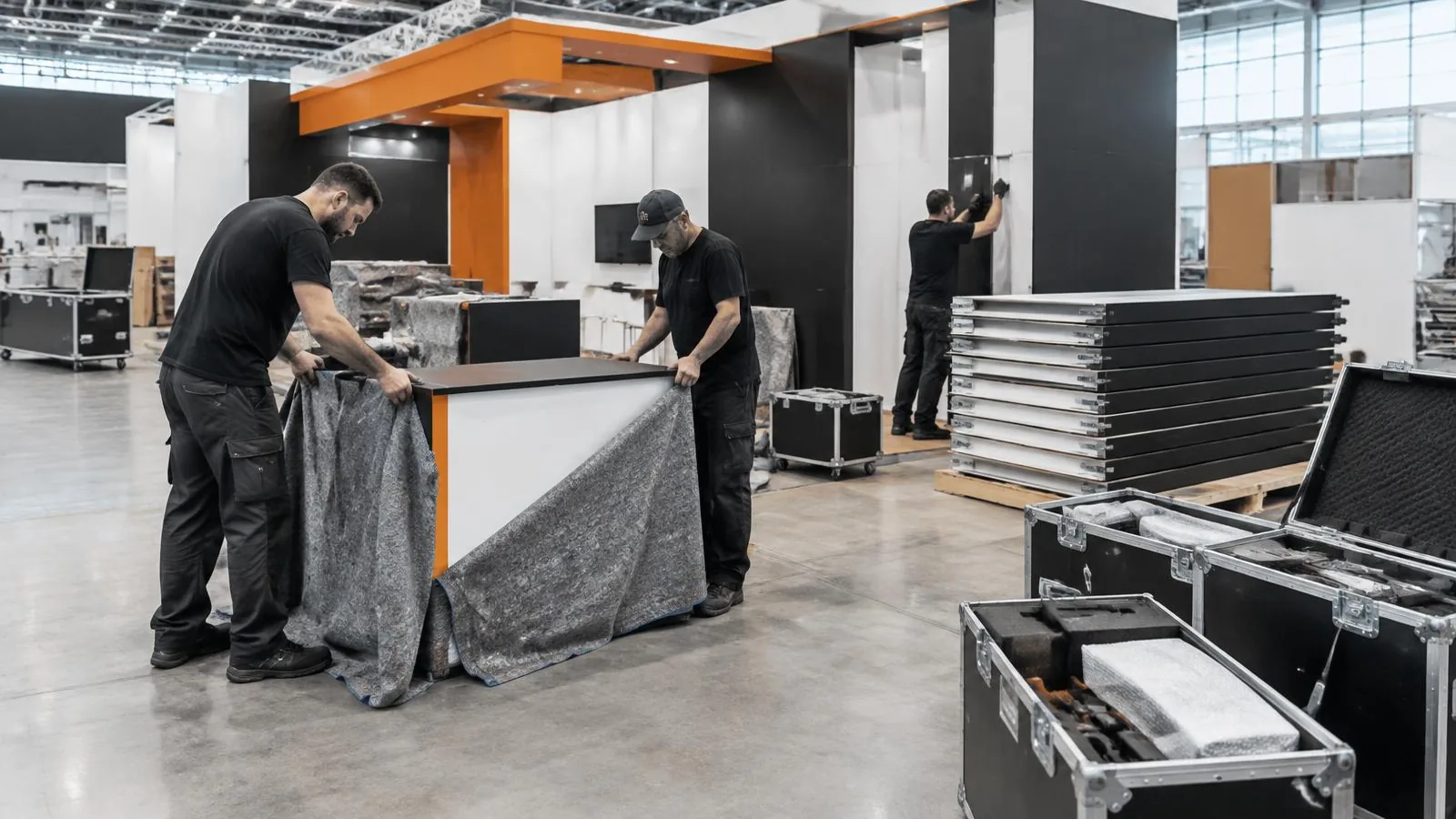
Exhibition booth dismantling and storage is about protecting the useful parts of your stand after visitors leave. A rushed breakdown can separate fittings from their components, damage finishes or leave no reliable record of what remains. The Concept WLL coordinates exhibition stand production and post-event project work so dismantling, packing and onward handling can be agreed before the show opens. Storage arrangements are scoped around the assets, destination and future exhibition plans rather than assumed as a universal package. This page focuses on existing booth components and their handover, not on designing a new reusable stand.
For exhibitors, agencies and procurement teams, the useful outcome is clarity: which parts are retained, how they are packed, who receives them and what condition they are in. The process is relevant to custom joinery, modular frames, counters, display fittings and reusable graphic systems across Saudi Arabia, Bahrain and the UAE. Your product stock, hired equipment and exhibitor-owned technology may require separate custody arrangements. Identify these distinctions early so the crew works to a documented return plan and your next exhibition team can find the information it needs.
Plan the breakdown before build-up starts
Post-event coordination should begin while the stand is being designed or reviewed. Decide whether the booth is being retained in full, partly recovered or removed after a single use. Record who owns each asset and where it must go, including hired furniture, screens and exhibitor products. This informs connection details, packing materials and the order of work. It also prevents the final evening becoming a series of decisions made by whoever happens to be on site. Share the official breakdown schedule and removal deadline with the project team, then confirm who can authorise a change if an exhibitor wants to retain an additional item.
Work within the organiser’s release and access rules
The public closing time is not automatically the time when contractors can begin dismantling or vehicles can enter. Follow the current organiser instructions for contractor release, loading access and removal. Confirm any collection appointments and official handling arrangements that affect the sequence. Keep visitor activity and exhibitor packing separate from construction work until the relevant access conditions allow it. Heavy components, electrical disconnection and overhead elements require suitable coordination and competent personnel for the actual work. A planned sequence helps the team complete agreed tasks within the available window, but it should not rely on an invented collection time or a promise that every venue works the same way.
Dismantle components in a controlled sequence
A booth is easier to recover when the sequence follows how its parts connect. Remove vulnerable finishes and loose displays at the appropriate stage, isolate technical systems through the responsible team and support components before their fixings are released. Do not treat reusable wall panels as disposable construction debris. Counters, doors and display fittings may need separate handling so edges, hinges and surfaces are protected. Where previous drawings or assembly notes exist, use them to identify connections and the packing order. The method should suit the stand’s actual construction and the crew’s task assessment, with specialist work distinguished from routine joinery removal.
Pack finishes and keep fittings with their assemblies
Packing is most useful when it anticipates the next unpacking. Protect polished, painted or printed surfaces from contact with fittings and adjacent components. Separate delicate graphics from heavier structural sections where practical, and choose protection suitable for handling and the intended storage period. Keep connection hardware together in identified sets rather than leaving loose fixings at the bottom of a crate. The component description should connect to the drawing or inventory reference. Packaging that looks tidy but gives no clue to its contents can slow the next installation. Agree whether existing crates can be reused and which components need new protective packing before the breakdown begins.
Build a practical component and condition inventory
The inventory should identify what was retained, its quantity, packing location and visible condition at handover. Photographs can supplement the list, especially for panels that appear similar or assemblies with several possible configurations. Note damaged finishes, missing hardware and any items needing inspection before another build. Distinguish a counted component from one confirmed suitable for reuse; those are different statements. Record who prepared the inventory and who accepted the handover, along with exceptions that still need a decision. This information helps a marketing team plan graphics updates and allows a future fabrication team to estimate repair work without opening every package simply to discover what exists.
Agree storage conditions and retrieval responsibilities
Storage planning needs the actual component dimensions, volume, packaging and expected retention period. Discuss protection from moisture, dust and handling damage, access for inspection and how retrieval requests will be managed. Agree the appointed storage location and responsible party rather than assuming a particular facility or a standard long-term entitlement. Your quotation should identify storage-related charges, collection arrangements and any agreed checks separately from dismantling. Consider how components can be retrieved for a smaller stand or a sample inspection without unpacking the entire kit. If the next exhibition date is not known, record when the assets will be reviewed and who will make the retention decision.
Prepare for the next exhibition, not just the next collection
Recovered assets should enter the next planning cycle with enough time for inspection, refurbishment and configuration changes. The new show may have a different footprint, access window or display objective. Share the inventory with the design team before it develops a layout around components that are missing or unsuitable. Replacement graphics, damaged edges and technical fittings can then be addressed before dispatch. For an ongoing programme, connect the post-show condition notes to the next project brief so repeated issues are visible. Reuse can reduce unnecessary new fabrication when assets remain suitable, but the decision should consider repair, transport and storage requirements rather than assume that every recovered piece should be installed again.
Request a breakdown and storage coordination scope
Provide the show, venue, stand size, official removal window and photographs or drawings of the booth. Identify what belongs to you, what is hired and what must be returned to a supplier. Add the collection destination, likely next-show dates and any packaging already available. For regional moves, the receiving team and appointed transport provider need compatible handover information. A useful proposal separates labour, packing, inventory, specialist tasks, transport interfaces and storage arrangements so nothing important is hidden in a broad breakdown description. Use the homepage enquiry form to discuss the scope before the exhibition; early decisions make it easier to plan the materials and responsibilities the close-out requires.
Scope to agree for your project
- Review of the official breakdown and collection requirements
- Retained, returned and removed asset schedule
- Dismantling sequence and agreed specialist interfaces
- Protective packing and component identification
- Inventory and visible condition notes at handover
- Storage, retrieval and next-show preparation coordination as agreed
From your brief to project handover
Define the assets
Agree which components are retained, hired, exhibitor-owned or removed. Identify stock and technology that need separate custody.
Confirm access
Review the organiser’s breakdown release, collection window and loading requirements with the appointed project and handling teams.
Prepare packing
Match protection, crates and identification to the recovered parts, with an inventory structure that the receiving team can use.
Dismantle and record
Follow the agreed removal sequence and record retained components, visible condition and any items needing a later inspection.
Hand over for reuse
Complete the agreed collection or storage handover, including inventory, exceptions and the next planning responsibilities.
Exhibition Booth Dismantling and Storage: questions answered
Can dismantling be arranged without commissioning a new stand?
It can be discussed as a defined project scope. We need the stand drawings or photographs, ownership information, organiser removal window and collection plan to assess the work and required coordination.
Is storage automatically included?
No. Storage location, period, component volume, access and retrieval arrangements must be agreed. These should be clear in the proposal alongside dismantling and packing.
Can you handle hired equipment and exhibitor stock?
Identify those items separately. Returns to appointed suppliers and custody of valuable products require agreed responsibilities, collection details and the relevant handling instructions.
How is the component inventory prepared?
The agreed inventory can record descriptions, quantities, packing references and visible condition, supported by photographs where useful. Missing items and inspection needs should be noted rather than assumed away.
Can we keep only part of a custom booth?
Yes, that can be planned where the components are suitable for recovery. Decide which parts are worth retaining before dismantling, considering their condition and the likely next use.
What details are needed for a quotation?
Share the venue, removal window, stand plan, photographs, ownership list, destination, available packing and expected storage period. Include the next exhibition brief if it is already known.
Related pages
- Exhibition stand design and build
- Reusable stand design for multi-show programmes
- Riyadh exhibition and production planning
- Exhibition stand services in Manama
- Exhibition stand services in Dubai
- Exhibition Stand Refurbishment Services
- Exhibition Stand Transport and Logistics Management
- Trade Show Meeting Room and Private Lounge Construction
- Custom Product Demonstration Booth Design
- Discuss your exhibition project
Photo: AI-generated illustration