Exhibition Stand Transport and Logistics Management
Connect fabrication, protected packing, transport partners and venue delivery around the real deadline for your exhibition stand.
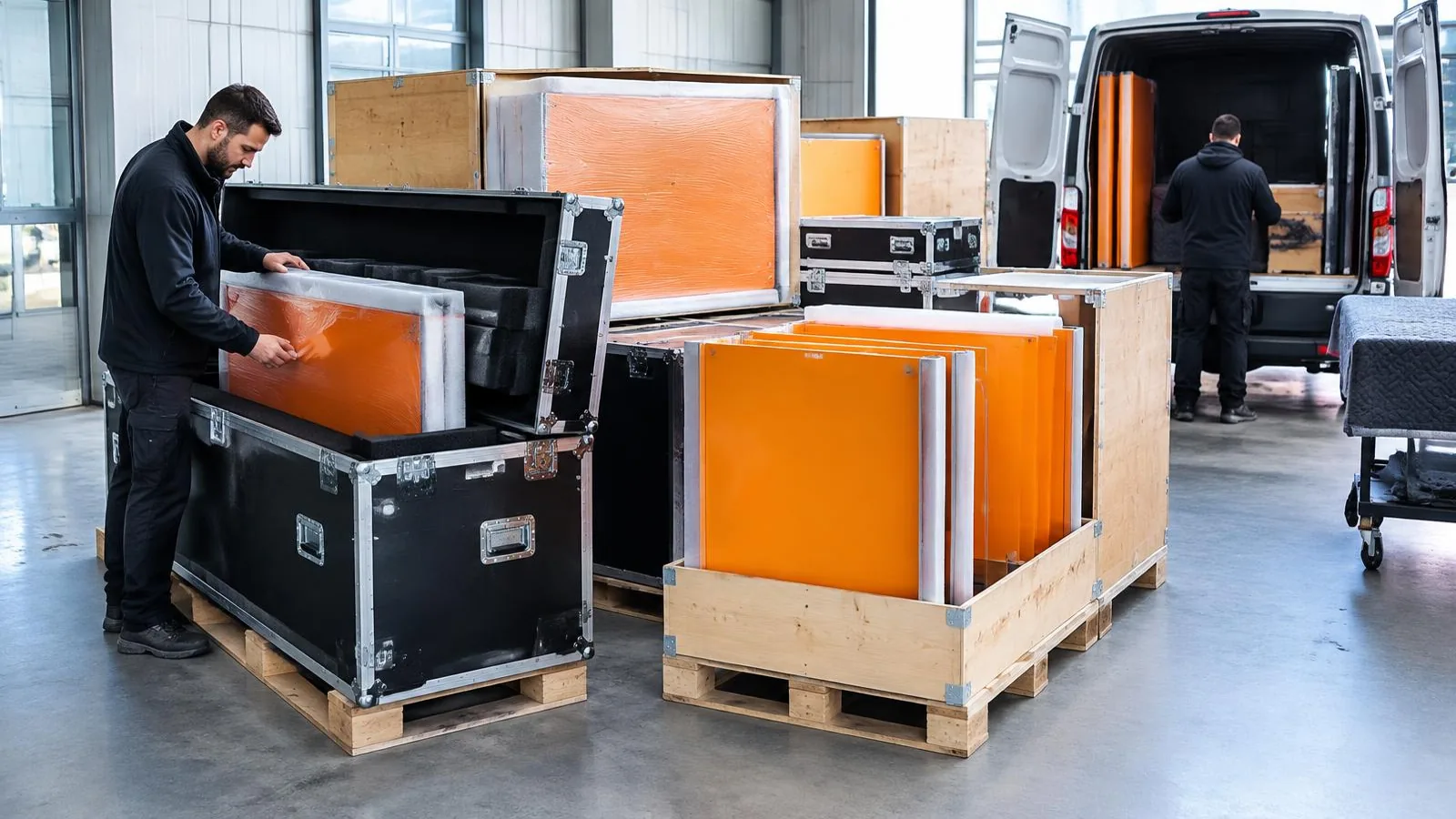
Exhibition stand transport and logistics management connects the physical build with the venue where it must be installed. The work includes planning component sizes, packing, dispatch readiness, delivery schedules and the handover between production teams, transport providers and venue handling services. The Concept WLL coordinates these interfaces as part of an agreed exhibition project. This is different from designing a booth for a logistics company: the subject here is moving exhibition stand materials and preparing them for installation. The scope follows the actual shipment, booked exhibition and responsible partners, not a standard freight promise.
Our exhibition design and fabrication work, supported by Bahrain headquarters and Riyadh production capability, gives these discussions a practical production context. A shipment is useful only when its contents match the approved layout and arrive with the information the installation team needs. For Saudi Arabia, Bahrain, UAE and other agreed exhibition destinations, share the venue manual, build-up dates and asset origin early. Product stock, regulated items, specialist equipment and cross-border documentation may involve additional appointed providers. Their responsibilities should be identified alongside the stand material movement rather than discovered during dispatch.
Start with a shipment plan and a complete component list
List the structures, joinery, graphics, display fittings and technical components that must reach the venue. Record their dimensions, weights where available, handling needs and the assembly they belong to. This information helps the appointed transport team assess vehicle or shipment requirements and allows the project manager to identify missing items before loading. Distinguish stand materials from promotional stock, demonstration products and hired equipment, because their paperwork and delivery arrangements may differ. An accurate list also helps decide which components can travel assembled and which should be split into manageable sections. Avoid planning from the finished stand footprint alone: its packed volume and handling constraints can be very different.
Design and pack components for the intended journey
Transport planning can influence fabrication details before the build is complete. Oversized joinery may need sectional connections, detachable features or protection around vulnerable corners. Packaging should suit the route, handling stages and component finish, not simply the trip from a workshop door to a vehicle. Separate decorative graphics from items likely to abrade them, protect glass or delicate display parts through suitable arrangements and keep fittings with the assemblies they support. Confirm whether crates, reusable cases or other packaging are appropriate to the specific load. Where a component requires specialist handling, identify that requirement while design changes remain possible rather than treating it as a loading-day problem.
Build the delivery schedule backwards from installation
The exhibition opening is the final commercial deadline, but it is not the only one. Work backwards through installation, organiser inspections where applicable, delivery access, loading appointments, dispatch checks and production completion. Include the time needed for approved artwork, packing and outstanding component checks. Dependencies should be visible so a delayed graphic file is not mistaken for a transport issue. Agree a realistic dispatch decision point and who can authorise changes. A schedule built from confirmed venue information is more useful than a generic claim of fast delivery. The project team should also know which activities can continue if an item is delayed and which parts are essential before assembly can begin.
Coordinate venue access and official handling services
Check the current exhibitor manual for vehicle booking, loading access, permitted entry points, contractor credentials and material handling arrangements. Some services must be booked through organiser-appointed providers; discuss these interfaces without assuming a direct vehicle arrival at the stand. Share the stand number, hall, receiving contact and agreed unloading details with the transport and installation teams. A shipment that arrives during the wrong access period may still be unavailable to the crew when it needs it. Coordination should therefore join the delivery plan to the actual installation sequence, with responsibilities for booking, payment and receipt recorded before dispatch.
Plan cross-border movements with the appointed specialists
A project involving more than one country requires attention to the shipment contents, importer or consignee details, route and intended onward use. Ask the appointed logistics or customs specialists what documentation and clearance arrangements apply to the actual materials. Temporary exhibition equipment, commercial products and consumables may be treated differently, so avoid presenting one assumption as suitable for every load. Confirm who provides accurate item descriptions and values, who submits documents and who receives clearance updates. The Concept’s project coordination should align fabrication and installation decisions with that specialist advice. Cross-border permission, transit time and customs outcomes should not be guaranteed without the relevant provider’s verified arrangements.
Use packing references the installation team can follow
An organised load should connect each crate or package to the component inventory and the planned assembly. The receiving team needs to know where structural elements, counters, graphics and fittings are located, especially when packages cannot all be opened immediately. Record quantities and visible condition at the agreed handover stage, with photographs for vulnerable or complex items where useful. Keep production drawings and assembly information available to the appropriate crew. A clear reference system reduces dependence on a single person remembering how the materials were packed. If an item is missing or damaged, the team can identify the affected assembly and discuss the necessary action without searching the entire shipment.
Separate stand delivery from show-day product movement
The stand material load and the exhibitor’s product programme may need different schedules. Demonstration equipment might arrive through a specialist supplier, while product samples are delivered by the exhibitor after construction is complete. Establish when those items can enter the stand, who signs for them and whether their packaging must remain available for return. Power-up, calibration or product preparation should be planned with the responsible supplier rather than assumed to be part of transport. This distinction is especially important for large, fragile or high-value exhibits. A consolidated project schedule can show the interfaces while keeping custody and specialist obligations with the appointed parties.
Plan return transport and the next regional event
The outbound journey should be considered alongside breakdown and onward movement. Decide which stand components are retained, what packaging is needed again and where the assets go after the exhibition. If the next venue is already booked, review whether the components can be reused without refurbishment or reconfiguration. The return inventory should record condition and exceptions so future design does not rely on an incomplete kit. Regional programmes may require several handovers between storage, repair and installation teams. Planning these stages together creates a clearer project scope, but it does not establish an automatic saving or remove the need to confirm each organiser’s access arrangements.
Provide the details needed for a logistics proposal
Use the homepage enquiry form to send the show, venue, stand number, build-up and breakdown windows, material origin and intended return destination. Add component dimensions, inventory, packaging information and any specialist handling needs that are already known. Include the installation contact, appointed transport provider if one exists and the deadlines for documents or venue service bookings. A useful proposal distinguishes packing, transport coordination, official handling, documentation interfaces and receiving responsibilities. This makes it easier to compare the actual project requirements and avoids confusing general logistics support with vehicle ownership, freight brokerage or services that have not been agreed.
Scope to agree for your project
- Stand material inventory and shipment interface review
- Packing and dispatch readiness coordination
- Delivery programme aligned with the official build-up window
- Transport provider, venue and installation team handovers
- Cross-border documentation interfaces with appointed specialists
- Return movement and next-show coordination within the agreed scope
From your brief to project handover
Review the route
Confirm origin, destination, show access windows, return plan and the parties responsible for moving and receiving the materials.
Map the components
Record shipment dimensions, packing references and handling needs. Separate stand materials from product stock and specialist equipment.
Confirm the interfaces
Agree official handling bookings, receiving contacts and documentation responsibilities with the relevant providers before dispatch.
Prepare and dispatch
Check the agreed inventory, protective packing and readiness against the installation schedule, recording any outstanding items.
Receive and close out
Coordinate handover to the installation team, then use the post-show condition inventory to plan return transport or onward exhibition work.
Exhibition Stand Transport and Logistics Management: questions answered
Is this a logistics-industry exhibition booth service?
No. This page concerns transport and coordination of exhibition stand materials. Our separate logistics-sector stand design page covers booths for freight, warehousing and supply-chain exhibitors.
Do you provide a standard transport price?
The scope depends on packed dimensions, origin, destination, handling stages, access windows and return requirements. Share the actual inventory and exhibition schedule so these can be assessed.
Who manages customs documents for cross-border shipments?
Responsibilities must be agreed with the appointed logistics and customs specialists. They advise on the applicable requirements; the exhibitor and project team supply accurate component and shipment information.
Can graphics and stand structures travel together?
They can be planned as part of one shipment when suitable packaging and handling arrangements are in place. Delicate finishes should remain protected from heavy components and loose hardware.
Can you coordinate delivery into the exhibition hall?
Venue access and official handling requirements are reviewed for the exact show. The receiving plan should identify the permitted handover point, appointed services and installation contacts.
What do you need to plan return transport?
Provide the breakdown window, retained asset list, collection destination and future exhibition plans. Packaging availability and a post-show condition record help establish the required movement and preparation.
Related pages
- Exhibition stand design and build
- Reusable stand design for multi-show programmes
- Riyadh exhibition and production planning
- Exhibition stand services in Manama
- Exhibition stand services in Dubai
- Exhibition Stand Refurbishment Services
- Exhibition Booth Dismantling and Storage
- Trade Show Meeting Room and Private Lounge Construction
- Custom Product Demonstration Booth Design
- Discuss your exhibition project
Photo: AI-generated illustration